
Which pet portrait style fits your room? Royal for living rooms, watercolor for bedrooms, pop art for playful spaces. Style-to-room matching guide.
Why the Right Style Matters for Your Space
A pet portrait that looks stunning on your phone can clash with your living room. Or disappear into the wall. Or make your carefully curated space feel like a novelty shop. The portrait itself might be beautiful — the problem is the match between art style, room function, and existing decor.
We've seen this pattern after generating thousands of portraits at create.petcanvas.art: people pick a style they love on screen, print it, hang it, and something feels off. The dark moody Caravaggio Twilight portrait vanishes on a charcoal accent wall. The bright Pop Art print overwhelms a serene bedroom. The mismatch isn't about quality — it's about context.
This guide maps each portrait style to specific rooms, wall colors, and interior design aesthetics so your pet's portrait feels like it belongs exactly where you hang it.
Style-to-Room Matching Guide
Every Pet Canvas style has a natural habitat — a room type where it looks most at home. Here's the breakdown based on our style catalog and interior design principles.
| Style | Best Rooms | Interior Design Fit | Mood |
|---|---|---|---|
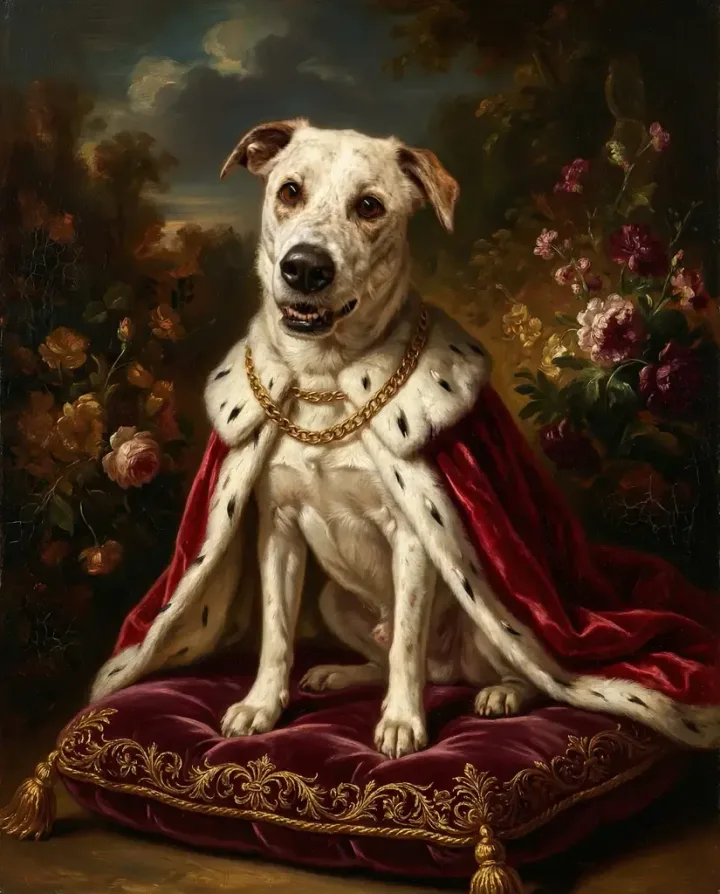
| Royal Velvet | Living room, dining room, study | Traditional, transitional, maximalist | Dramatic, regal |
| Florentine Court | Master bedroom, hallway, reading nook | Classic, Mediterranean, warm modern | Warm, refined |
| Caravaggio Twilight | Study, home office, gallery wall | Modern dark, industrial, moody minimalism | Intense, museum-quality |
| Royal Azure | Bedroom, bathroom, coastal rooms | Coastal, Scandinavian, blue-toned spaces | Calm, noble |
| The Aristocrat | Entryway, living room, above fireplace | Georgian, traditional, eclectic | Stately, conversational |
| Grand Baroque | Dining room, formal living room | Baroque revival, opulent, eclectic maximalist | Theatrical, ornate |
| Gilded Salon | Powder room, dressing room, accent wall | Art deco, Hollywood regency, glam | Luxurious, golden |
| Ember & Oak | Den, cabin, rustic living room | Farmhouse, rustic, earth-toned spaces | Warm, grounded |
| Golden Age | Library, study, classic living room | Dutch Golden Age, traditional, scholarly | Contemplative, rich |
| Pop Art | Kitchen, playroom, kids' room, hallway | Modern, eclectic, colorful, Warhol-inspired | Fun, energetic |
Living Room: The Statement Piece
Your living room is where guests spend the most time. The portrait here is a conversation starter. Go bold: Royal Velvet or The Aristocrat above the sofa or fireplace. These styles command attention and hold their own next to substantial furniture. Large format (18×24" or bigger) works best — anything smaller gets lost on a living room wall.
If your living room leans modern rather than traditional, Ember & Oak bridges the gap. Its warm earth tones and painterly texture feel contemporary without clashing with mid-century or Scandinavian furniture.
Bedroom: Calm Over Drama
Bedrooms need softer energy. Florentine Court and Royal Azure both work here — warm palette or cool palette, depending on your bedding and wall color. Avoid high-contrast styles like Caravaggio Twilight in the bedroom. That dramatic lighting is energizing, not relaxing.
Home Office or Study: Dark and Focused
Caravaggio Twilight and Golden Age were made for studies. The dark backgrounds reduce visual noise, and the dramatic lighting gives the portrait a museum-quality gravitas that works behind a desk. If you're on video calls, a well-lit pet portrait behind you is a surprisingly effective background piece — professional but personal.
Kitchen, Hallway, Playroom: Fun Territory
Pop Art owns these spaces. Bright, graphic, unapologetically playful. A Warhol-style grid of your dog's face in the kitchen makes people smile every morning. Hallways benefit from smaller prints in unexpected styles — Pastel Nobility with its impasto brushstrokes adds texture to an otherwise blank passage.
How Wall Color Affects Your Portrait
This is the mistake people make most often. The portrait looks perfect on screen, but once it's on the wall, it either disappears or clashes. The wall behind the portrait is part of the composition whether you plan for it or not.
Dark Walls
Charcoal, navy, forest green: these walls swallow dark portraits. A Caravaggio Twilight portrait on a dark gray wall means your pet's face merges with the background. Instead, pick styles with lighter elements — Florentine Court (warm golds), Gilded Salon (gold accents pop against dark walls), or Royal Azure (the blue tones create contrast on warm dark walls).
Light Walls
White, cream, light gray: these are the most forgiving. Almost any style works here. But light walls can make light-toned portraits feel washed out. For white walls, the highest impact comes from high-contrast styles: Royal Velvet (deep crimson against white = instant drama) or Caravaggio Twilight (the dark backgrounds create a natural frame effect).
Colored Accent Walls
Match complementary, not identical. A terracotta accent wall pairs with Royal Azure (warm vs cool contrast). A sage green wall pairs with Ember & Oak (earth tone harmony). Never put a predominantly blue portrait on a blue wall — it reads as camouflage, not design.
Canvas vs Framed Print: Which Format for Which Room
The format matters as much as the style. Canvas and framed prints create different visual effects, and each suits different spaces.
| Format | Best For | Pros | Cons |
|---|---|---|---|
| Canvas wrap | Living room, bedroom, above fireplace | No glare, warm texture, gallery feel, no frame needed | Harder to clean, can't swap easily |
| Framed print | Gallery wall, hallway, office, bathroom | Polished look, glass protects from moisture, easy to swap | Glare in bright rooms, frame adds cost |
| Digital (screen) | Digital frame, desktop background, social media | No wall space needed, instant delivery, shareable | Not physical, depends on screen quality |
Renaissance and classical styles (Royal Velvet, Florentine Court, Caravaggio Twilight) look best on canvas. The texture mimics traditional painting and eliminates the glass glare that fights with dramatic lighting. Modern styles like Pop Art work well in clean frames — the graphic lines benefit from the crisp edge a frame provides.
For bathrooms or kitchens, always choose framed with glass. Humidity will damage unprotected canvas over time.
Gallery Wall Layout Ideas with Pet Portraits
A single portrait makes a statement. Multiple portraits create a gallery. Here are three layouts that work:
The Dynasty Wall
Three or more portraits of the same pet in different styles, arranged in a row. Same size frames, evenly spaced. Royal Velvet + Florentine Court + Caravaggio Twilight creates a "through the ages" effect that's both cohesive and varied. This works best on a long wall in a hallway or above a sofa.
The Family Portrait Collection
One portrait per pet, all in the same style but different sizes. Arrange asymmetrically around a central larger piece. This works for multi-pet households where each pet gets their own spotlight. Choose a consistent style (Royal Velvet across all portraits) for cohesion, or intentionally vary for eclectic energy.
The Mix-and-Match
Combine pet portraits with other art: family photos, prints, mirrors. The pet portrait becomes one element in a curated wall. For this to work, match the portrait's frame style to the surrounding pieces. A gold-framed Gilded Salon portrait next to black-and-white family photos in gold frames creates intentional harmony.
Common Decor Mistakes with Pet Art
After seeing thousands of portraits displayed in homes, these are the mistakes that keep repeating:
- Hanging too high. The center of the portrait should be at eye level (57–60 inches). Most people hang art 6–12 inches too high. Above a sofa? Bottom of the frame should be 6–8 inches above the sofa back.
- Wrong scale. A 5×7" portrait on a 12-foot wall looks like an afterthought. Measure the wall space first. For a wall section 4 feet wide, you want a portrait at least 16×20" — or a group of smaller pieces that fills the space collectively.
- Dark pet on dark style on dark wall. Triple dark = invisible pet. If your pet has dark fur and you love moody styles, you need a light or medium wall to provide contrast. Or choose a style with bright accents (Gilded Salon's gold, Royal Azure's blue tones).
- Mixing too many styles in one room. One portrait style per room. A Royal Velvet above the sofa and Pop Art on the adjacent wall creates visual confusion. Save different styles for different rooms.
- Ignoring lighting. A beautiful portrait in a dark corner is invisible. If you can't add a picture light or spotlight, hang the portrait where natural light reaches it. Avoid direct sunlight on canvas (fading), but ensure the wall gets indirect light during the day.
Frequently Asked Questions
What size pet portrait should I get for my living room?
For a main wall or above-sofa placement, 18×24" is the minimum. 24×36" makes a stronger statement. Measure the wall space: the portrait should fill roughly 60–75% of the available width for balanced proportions. At create.petcanvas.art you can preview the portrait before choosing your print size.
Which pet portrait style goes with modern minimalist decor?
Caravaggio Twilight works surprisingly well in minimalist spaces. The dark background acts as negative space, and the dramatic single-light-source technique creates a focal point without visual clutter. Royal Azure also fits — its cool tones complement the neutral palettes typical of minimalist interiors.
Can I hang a canvas pet portrait in the bathroom?
Not recommended. Canvas absorbs moisture and can warp or develop mold in humid environments. For bathrooms, choose a framed print with glass or acrylic glazing. This protects the portrait from steam and humidity while still looking great.
How do I choose between Royal Velvet and Caravaggio Twilight?
Royal Velvet is warmer, more colorful (crimson, gold), and works in rooms with traditional or transitional decor. Caravaggio Twilight is darker, moodier, and suits modern or industrial spaces. Light-furred pets pop more in Caravaggio Twilight. Dark-furred pets show more detail in Royal Velvet. Try both for free at create.petcanvas.art — you can compare side by side in under 4 minutes.
What's the best way to display multiple pet portraits together?
Three approaches: same style different sizes (cohesive), same pet different styles in a row (the "dynasty" look), or mixed into a larger gallery wall. Keep consistent framing for the cleanest result. Space frames 2–3 inches apart, and center the arrangement at eye level (57–60 inches from floor).

Turn Your Pet Into Art
Upload your pet photo, choose from dozens of artistic styles, and get a stunning portrait in minutes.
Create Your PortraitFree preview — try before you buy


